
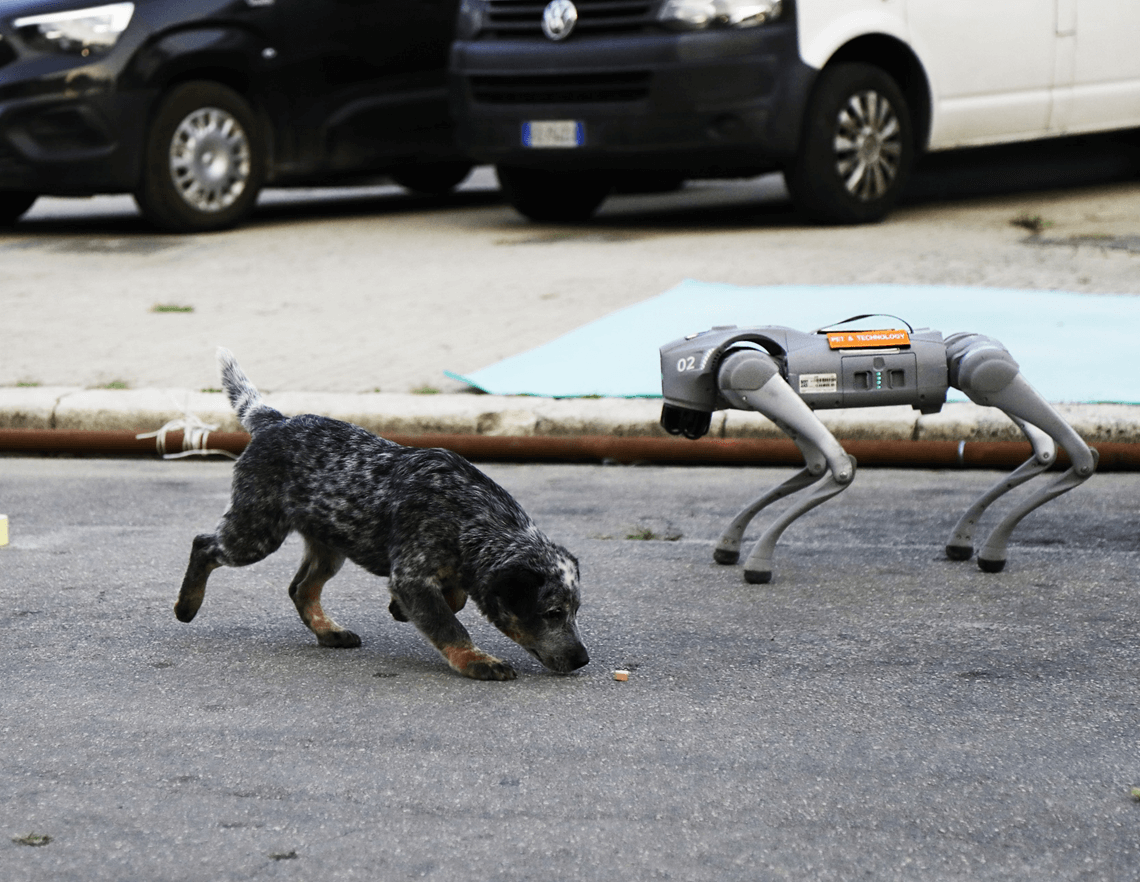
In 2023, K9-V developed and patented an innovative and unique canine handling technique: Free Handler Mode (i.e., off-leash and at a distance from the handler) conducted via UAV/UGV/USV (remotely piloted devices such as drones and robots).

Where did this idea come from?
The concept stems from the military background on which K9-V is founded.

As we all know, dogs possess an exceptional sense of smell, with an ability to identify and discriminate odors up to 100,000 times greater than that of humans. Moreover, there has always been a special bond connecting dogs and humans, earning the dog the title of “man’s best friend.”

By combining these two simple concepts, dogs have historically represented an extremely valuable asset for K9 units within the Armed Forces and Law Enforcement, deployable across multiple activities: from detecting explosives to secure sites, buildings, and vehicles; to detecting electronic devices for environmental sweeps; to search and rescue operations; and much more. In short, how many times have dogs saved—and continue to save—our lives?

However, these activities can be very dangerous, especially for the operators. Can the safety of these operations be increased? The answer is yes, thanks to our patented handling method. This method allows the dog to be sent forward toward the “target” completely autonomously, off-leash, guided solely by technology.

For the operator, it is therefore possible to guide the dog using a remotely piloted device while remaining in a safe, secure location at a distance. The dog is trained not only to follow the technology but also to perform indications discreetly and then immediately move to safety. This ensures the task is completed successfully while maximizing the safety of both the operator and the dog.

The study of this fascinating field continues day by day, seeking new solutions to implement, with the goal of making operations even more efficient and safe. In fact, K9-V has also developed its own drone, customized with all the necessary features to carry out detection activities.

Patent no. 102022000011069